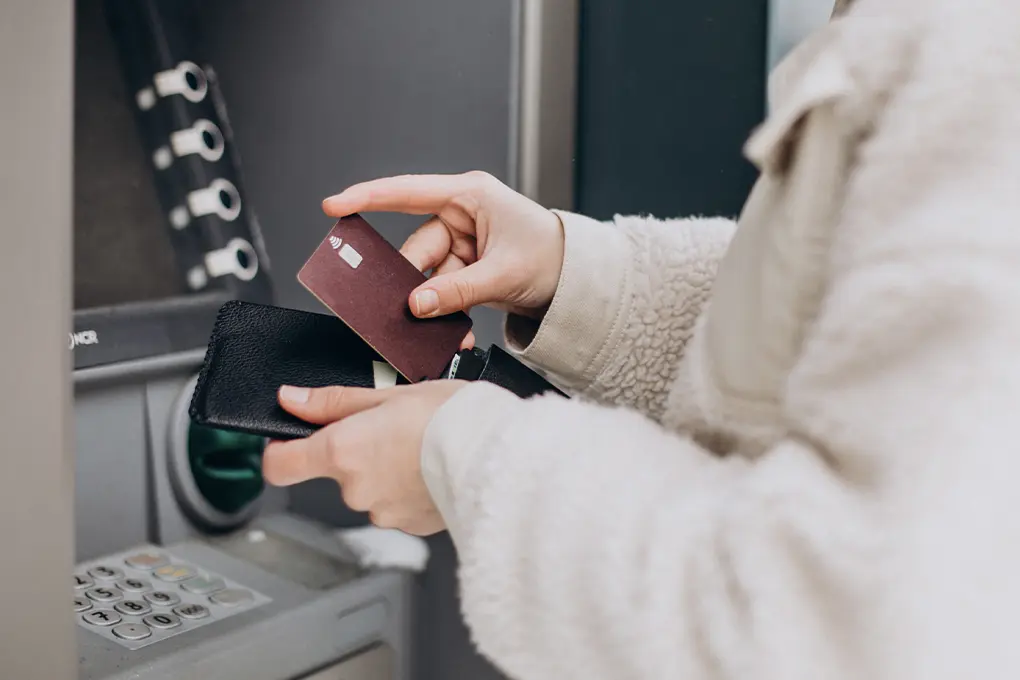

Quick Answer: An RFID wallet blocks contactless card skimming at 13.56 MHz, while a Faraday wallet (or pouch) blocks a much wider range of signals – including cellular, Wi-Fi, GPS, and Bluetooth – making it the right choice for protecting phones, key fobs, and passports alongside cards.
Table of Contents
- Key Takeaways
- RFID Wallets and Faraday Wallets: The Same Thing?
- How RFID Blocking and Faraday Shielding Work
- RFID Wallet vs Faraday Wallet: Key Differences at a Glance
- What Threats Are Worth Protecting Against?
- When to Choose an RFID Blocking Wallet
- When to Choose a Faraday Wallet or Pouch
- RFID Skimming vs Relay Attack: Protection Comparison
- Choosing the Right Signal-Blocking Wallet: What to Look For
- Making the Right Choice for Your Situation
- Frequently Asked Questions
- Sources
Key Takeaways
- An RFID wallet uses card-specific shielding to block contactless card skimming, while a Faraday wallet provides broad-spectrum electromagnetic shielding across multiple signal types and devices.
- RFID-blocking wallets target the 13.56 MHz frequency used by contactless cards and NFC; Faraday bags must cover from low MHz up to 10 GHz or higher to block cellular, Wi-Fi, GPS, and Bluetooth.
- Relay attacks on keyless car entry fobs are a documented, growing threat – a Faraday pouch is the recommended defense from law enforcement and insurers alike.
- Credit card RFID skimming remains low-risk due to encryption and one-time transaction codes, but passport RFID data and key fob signals are more vulnerable and worth protecting.
- Browse Batten’s signal-blocking protection collection for RFID wallets, Faraday pouches, and key fob protectors tested by our digital security experts.
RFID Wallets and Faraday Wallets: The Same Thing?
Walk into any travel gear store or search Amazon and you’ll see the terms used interchangeably. “Faraday wallet.” “RFID-blocking wallet.” “Signal-blocking cardholder.” Manufacturers swap them freely, which creates real confusion about what you’re actually buying – and whether it protects against the threats you face.
Here’s the short version: every RFID wallet uses Faraday cage principles to block signals. But not every Faraday wallet limits itself to RFID frequencies. The distinction matters because different threats require different shielding – and buying the wrong product leaves real gaps in your protection.
This guide cuts through the marketing noise to explain what each type actually blocks, which threats are worth worrying about, and how to pick the right wallet for your situation.
How RFID Blocking and Faraday Shielding Work
Both technologies trace back to one discovery. In 1836, physicist Michael Faraday lined a room in conductive material and demonstrated that electromagnetic charges distribute around an enclosure’s exterior, leaving the interior field-free. That principle, documented by the National MagLab, is what your wallet relies on today – whether it’s marketed as RFID-blocking or Faraday.
The difference between the two product types comes down to frequency range and construction.
How RFID Wallets Block Signals
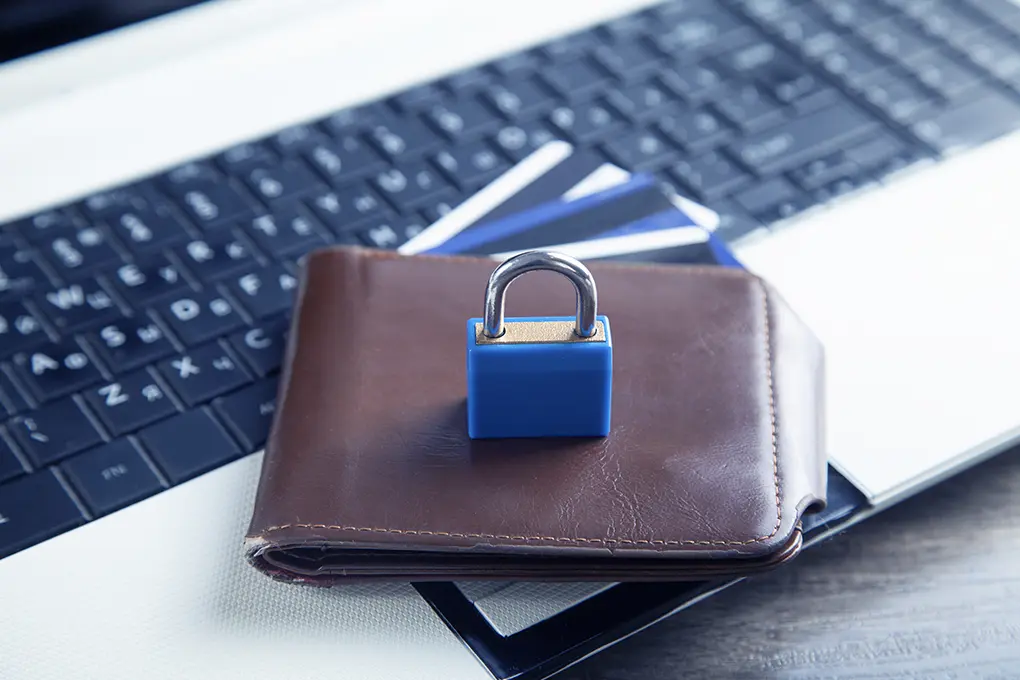
An RFID-blocking wallet embeds a thin layer of conductive material – typically aluminum, copper, or carbon fiber mesh – between the wallet’s outer and inner lining. When an RFID reader sends out a signal to activate a chip, the conductive layer intercepts and cancels it before it reaches your card.
Most contactless payment cards and e-passports operate at 13.56 MHz (high-frequency NFC band). Some older key fobs and access badges use 125 kHz (low frequency). RFID wallets are engineered to block these specific, narrow frequency ranges – they do that job well, but they aren’t built for anything else.
How Faraday Wallets and Pouches Work
A true Faraday wallet or pouch uses multi-layer conductive shielding designed to block a much wider spectrum – from low MHz up through 10 GHz or higher. According to HowStuffWorks’ breakdown of Faraday cage physics, the cage works because electromagnetic waves cause the conductive material’s electrons to rearrange, generating an opposing field that cancels signals inside the enclosure.
This broader construction is what allows Faraday pouches to block:
- Cellular signals (700 MHz-4 GHz+)
- Wi-Fi (2.4 GHz and 5 GHz)
- Bluetooth (2.4 GHz)
- GPS (1.2-1.6 GHz)
- RFID/NFC (125 kHz and 13.56 MHz)
- Key fob signals (315 MHz or 433 MHz, depending on region)
A wallet with thin RFID-blocking foil won’t achieve this. Multi-layer materials, careful seam construction, and quality closures are all required to seal the broader frequency spectrum.

RFID Wallet vs Faraday Wallet: Key Differences at a Glance
| Feature | RFID Blocking Wallet | Faraday Wallet / Pouch |
| Primary Purpose | Block contactless card skimming | Block all wireless signals |
| Frequency Range | 125 kHz – 13.56 MHz (card/NFC range) | Low MHz up to 10 GHz+ |
| Cards Protected | Yes | Yes |
| Key Fob Protected | No | Yes |
| Phone Signals Blocked | No | Yes (with correct size) |
| Passport RFID Protected | Yes | Yes |
| GPS/Cellular Blocked | No | Yes |
| Typical Form Factor | Slim wallet, card sleeve | Pouch, bag, or purpose-built wallet |
| Construction | Single conductive layer | Multi-layer shielding, sealed seams |
| Price Range | $15-$60 | $20-$150+ |
| Best For | Everyday card protection | Key fobs, phones, travel, high-security needs |
What Threats Are Worth Protecting Against?
Before spending money on shielding, it’s worth understanding which threats are real and which are overstated.
Credit Card RFID Skimming: Lower Risk Than Marketed
Here’s the honest truth that most RFID wallet companies won’t put in their ads: credit card RFID skimming is largely theoretical in practice. Wikipedia’s documentation on RFID skimming notes that no reliable statistics exist for card skimming incidents specifically, because it’s difficult to determine the method of fraud after the fact.
There are solid technical reasons the threat remains low:
- Most modern contactless cards generate a one-time encrypted transaction code per scan – even if a thief captures it, it’s useless for further transactions.
- Cards no longer transmit cardholder names or CVV codes wirelessly.
- Multiple RFID cards in a wallet simultaneously emit conflicting signals, making individual card reads difficult.
- Thieves can buy thousands of card numbers from dark web marketplaces for less effort than scanning individuals on a subway platform.
Security researcher Roger Grimes has stated he’s never found a single real-world crime that would have been prevented by an RFID blocker. The FTC’s research on RFID technology and consumer privacy has long acknowledged the data security concerns, particularly around passport data.
That said, RFID blocking adds no friction to daily life and provides meaningful protection in two areas that matter more: e-passports and building access cards, which can hold more sensitive data than a payment card.

Keyless Car Entry Relay Attacks: A Real, Growing Threat
Key fob relay theft is a different story entirely. This is a documented, real-world crime that has risen sharply. Relay attacks work by using two-person teams: one thief positions near your home to amplify your fob’s signal, while a second thief stands by your car to receive the boosted signal and unlock it. The entire process takes under 60 seconds and leaves no forced-entry evidence.
Our Batten Cyber testing on Faraday pouches for key fob relay theft protection confirms that quality Faraday pouches neutralize this threat reliably. Law enforcement agencies and automotive insurers now recommend Faraday pouches as a standard prevention measure. A standard RFID wallet won’t help here – key fobs operate at 315 MHz (US) or 433 MHz (Europe), frequencies that narrow RFID shielding doesn’t cover.
Fact: According to the BBC, up to 70% of car thefts now involve keyless vehicles.
Passport and E-Document Protection
E-passports contain RFID chips with biometric data. While the Federal Registrar notes that passport chips are designed to only be readable when the document is open, travel in densely crowded environments – airports, transit hubs, international border crossings – can put documents at some risk. An RFID-blocking wallet or travel pouch addresses this risk effectively.
When to Choose an RFID Blocking Wallet
An RFID wallet is the right call when your primary concern is protecting contactless payment cards and your e-passport from unauthorized scanning. It’s thinner, lighter, looks like a normal wallet, and works passively without any setup.
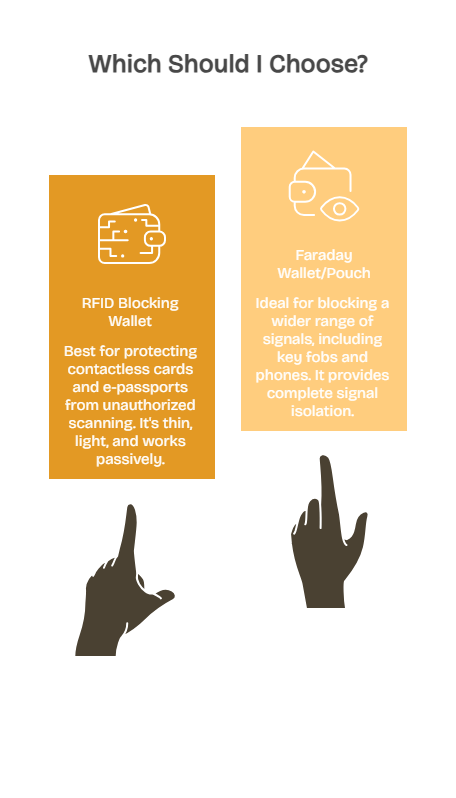
RFID blocking wallets work best for:
- Everyday commuters who tap cards on transit systems and want baseline protection
- Frequent travelers who carry e-passports in their wallets while moving through crowded transit hubs
- Minimalists who carry 2-6 cards and want slim, unobtrusive protection
- Budget-conscious buyers who want signal protection without spending on full-spectrum Faraday gear
- Anyone with building access cards or employee ID cards that use low-frequency RFID
If your wallet is your only concern – and you’re not worried about your phone, key fob, or tablet – a quality RFID-blocking wallet delivers exactly what you need at a lower price point. Look for wallets that list the specific frequencies they block, use independently tested materials, and cover both 125 kHz and 13.56 MHz ranges.
When to Choose a Faraday Wallet or Pouch
A Faraday pouch or wallet is the right choice when you need to block more than just card frequencies. The most common and legitimate use cases are key fob protection, phone privacy, and travel situations requiring complete signal isolation.
Faraday protection makes sense for:
- Keyless car owners who want to prevent relay attacks overnight or while parked in high-theft areas
- Travelers passing through areas with high electronic surveillance or data theft risk
- Remote workers handling sensitive client data who need devices completely offline during transit
- Privacy-focused individuals who want to prevent smartphone tracking, GPS logging, or cellular surveillance
- High-profile individuals including executives, lawyers, or government employees handling sensitive communications
- Anyone carrying multiple signal-emitting devices (phone + key fob + laptop)
For a detailed breakdown of the best Faraday pouches and bags available today, see our complete Faraday bags comparison guide.

RFID Skimming vs Relay Attack: Protection Comparison
| Threat | What’s at Risk | RFID Wallet Protects? | Faraday Pouch Protects? | Real-World Risk Level |
| Contactless card skimming | Card number (limited data) | Yes | Yes | Low – encryption limits usability |
| E-passport data theft | Biometric identity data | Yes | Yes | Low-moderate in crowded transit |
| Key fob relay theft | Vehicle theft in under 60 sec | No | Yes | High – documented, growing threat |
| Phone location tracking | GPS/cellular location data | No | Yes | Moderate – context dependent |
| NFC payment interception | Transaction data | Yes | Yes | Low – one-time encrypted codes |
| Building access card cloning | Physical access control | Yes (125 kHz) | Yes | Moderate in corporate environments |
| Bluetooth device discovery | Device identity, pairing exploits | No | Yes | Low-moderate |
Choosing the Right Signal-Blocking Wallet: What to Look For
Not all wallets that claim RFID blocking or Faraday shielding actually deliver. Here’s what separates quality products from marketing hype.
Materials and Shielding Layers
For RFID wallets, look for aluminum or copper mesh embedded in the lining, not just metallic-looking fabric. For Faraday pouches, multi-layer construction with materials verified against IEEE standards provides measurably better attenuation. The SLNT E3 Faraday Backpack review on Batten Cyber found that products using military-tested shielding materials delivered consistent 85-90 dB attenuation across the full frequency range.
Seam and Closure Quality
This is where cheaper products fail. Any gap in a Faraday enclosure allows signals to bleed through. According to research published in the International Journal of Science and Research Archive on Faraday cage physics, apertures in a cage need to be smaller than 1/10th the wavelength of the signal being blocked. A loose Velcro flap or unsealed zipper compromises the entire pouch.
Independent Verification
Reputable manufacturers publish third-party attenuation test results. Look for references to IEEE 299-2006, MIL-STD-461, or NTS certificate numbers. Products that only cite their own testing or make vague “military-grade” claims without documentation warrant skepticism.
Testing Your Own Wallet
You can run a quick test at home:
- Cards: Place your contactless card inside your closed wallet and hold it to a payment terminal. If the transaction completes, your shielding isn’t working.
- Key Fob: Put your fob inside the pouch, close it completely, and attempt to unlock your car from a few feet away. No response means the shielding is effective.
Making the Right Choice for Your Situation
The right wallet depends on what you’re actually trying to protect. If your concern is purely contactless card skimming, a quality RFID-blocking wallet delivers effective protection at a reasonable price – and the slim form factor won’t add bulk to your daily carry.
If you’re also concerned about your car key fob, phone privacy, or passport data while traveling, a Faraday pouch or multi-purpose bag extends your protection to the signal types that pose a more concrete risk. Relay theft in particular is a threat where a $20-$30 Faraday pouch can prevent a vehicle theft in seconds.
For full-spectrum digital protection that pairs your physical signal shielding with identity monitoring and credit fraud alerts, explore Batten’s identity theft protection services – because the most common forms of financial fraud don’t come from your wallet at all. They come from data breaches, phishing, and stolen credentials.
Ready to protect your cards, key fob, and digital identity from signal-based threats? Browse Batten’s signal-blocking protection collection for RFID wallets, Faraday pouches, and key fob protectors independently verified by our security team.
Frequently Asked Questions
What Is the Difference Between an RFID Wallet and a Faraday Wallet?
An RFID wallet blocks the narrow frequency range used by contactless payment cards and NFC chips (primarily 13.56 MHz). A Faraday wallet or pouch uses multi-layer shielding to block a far broader spectrum – covering cellular, Wi-Fi, GPS, Bluetooth, and RFID simultaneously. All RFID wallets use Faraday cage principles, but not all Faraday products limit themselves to card frequencies.
Do RFID Blocking Wallets Really Work Against Contactless Card Skimming?
Yes, quality RFID wallets do block contactless card signals. The more relevant question is whether that protection is necessary: modern contactless cards generate one-time encrypted transaction codes, making skimmed data largely unusable. The protection matters more for e-passports and building access cards, which can carry more sensitive and reusable identity data than payment cards.
Can a Faraday Wallet Block My Phone Signals?
A Faraday pouch large enough to contain your phone will block cellular, Wi-Fi, GPS, and Bluetooth signals when sealed properly. Standard wallet-sized Faraday products won’t accommodate a phone. Phone-specific Faraday sleeves like those from SLNT are purpose-built for this use case and independently tested to block signals across the 1-40 GHz range.
Does a Faraday Wallet or Pouch Protect Against Car Key Fob Relay Theft?
Yes – this is one of the strongest use cases for Faraday pouches. Key fobs transmit signals at 315 MHz (US) or 433 MHz (Europe), frequencies that RFID wallets don’t cover. Placing your key fob in a sealed Faraday pouch prevents thieves from amplifying and relaying the signal to unlock and start your vehicle. Our key fob relay theft guide covers how to test your pouch for real effectiveness.
How Do I Know If My RFID or Faraday Wallet Is Actually Working?
Test your RFID wallet by placing your contactless card inside (closed) and attempting a tap payment – a working wallet prevents the transaction. Test a key fob pouch by sealing your fob inside and trying to unlock your car from a few feet away – no response confirms the seal is effective. Quality products cite independent attenuation test results; look for IEEE 299-2006 or NTS certificate references rather than unverified “military-grade” claims.
Are RFID Wallets Necessary for Everyday Use in 2025?
For most people, the direct threat from contactless card skimming is low given modern card encryption. However, RFID wallets provide meaningful protection for e-passports, building access cards, and peace of mind in high-traffic travel environments. The minimal bulk and cost make them a reasonable precaution – just pair them with identity theft monitoring to address the far more common data breach and phishing threats.
What Is the Best Wallet for Protecting Both Cards and Key Fobs?
No single wallet-sized product effectively covers both. The practical solution is an RFID-blocking wallet for cards combined with a dedicated Faraday key fob pouch. This two-piece approach costs $30-$60 total and addresses both the card and vehicle theft threat vectors without compromise.
Sources
- The Faraday Cage: A Foundational Principle in Electromagnetic Shielding and Its Modern Applications. 2025. International Journal of Science and Research Archive. https://journalijsra.com/sites/default/files/fulltext_pdf/IJSRA-2025-0138.pdf
- Radio Frequency Identification (RFID): Applications and Implications for Consumers – Workshop Report. 2005. Federal Trade Commission. https://www.ftc.gov/sites/default/files/documents/reports/rfid-radio-frequency-identification-applications-and-implications-consumers-workshop-report-staff/050308rfidrpt.pdf
- How Faraday Cages Work. 2024. HowStuffWorks. https://science.howstuffworks.com/faraday-cage.htm
- What Is a Faraday Cage? 2022. National High Magnetic Field Laboratory. https://nationalmaglab.org/about-the-maglab/around-the-lab/what-is-that/faraday-cage/
- Electronic Passport. 2005. Federal Register. https://www.federalregister.gov/documents/2005/10/25/05-21284/electronic-passport
- RFID-Blocking Products Are Practically Worthless. Here’s Why. 2021. Digital Trends. https://www.digitaltrends.com/cool-tech/are-rfid-blocking-products-worth-your-money-we-asked-an-expert/