
Quick Answer: Geopolitical tensions between nation-states directly increase cyber risk for everyday individuals and families – triggering state-sponsored attacks, mass data breaches, and identity theft campaigns that target civilians caught in the crossfire.
Global conflict doesn’t stay on the battlefield. It spills into your inbox, your credit report, and your data.
When nation-states clash over trade, territory, or influence, cyberspace becomes an extension of that conflict. Sanctions trigger retaliatory hacks. Military buildups unlock destructive malware campaigns. Diplomatic disputes escalate into mass espionage – and ordinary people end up with their personal data exposed on dark web marketplaces.
According to the World Economic Forum’s Global Cybersecurity Outlook 2026, 64% of organizations now account for geopolitically motivated cyberattacks in their risk strategies. Meanwhile, 73% of respondents reported that they or someone they know was personally affected by cyber-enabled fraud in 2025 alone. This is not an abstract boardroom problem – it reaches your family’s devices, bank accounts, and identities.
Table of Contents
- Key Takeaways
- How Nation-State Cyber Attacks Reach Everyday People
- Geopolitical Threats Cybersecurity Professionals Watch Most Closely
- How Global Instability Increases Your Personal Cyber Risk
- What Geopolitical Cyber Risk Looks Like for Individuals and Families
- Protecting Yourself from Geopolitical Cyber Threats
- Taking Action Against Geopolitical Cyber Threats
- Frequently Asked Questions
- Sources
Key Takeaways
- Geopolitical tensions between nation-states are the leading driver of elevated cyber risk for individuals, families, and businesses in 2026.
- State-sponsored hackers from Russia, China, Iran, and North Korea actively target civilian data, financial systems, and critical infrastructure to advance political goals.
- Supply chain attacks and mass data breaches – often triggered by geopolitical events – expose millions of people’s personal information to criminal markets.
- 60% of executives now rank cyber risk as a top-three strategic priority because of political instability and trade disputes, according to a 2025 PwC Global Cyber Risk report.
- Protect yourself now with identity protection services designed to detect, monitor, and respond to threats born from global instability.
How Nation-State Cyber Attacks Reach Everyday People
State-sponsored hackers don’t only target defense contractors or power grids. They target the data ecosystems those systems connect to – and those ecosystems include you.
China’s Volt Typhoon group maintained persistent access in U.S. critical infrastructure networks for over five years, according to joint advisories from CISA, the FBI, and the NSA.
Russia’s Sandworm group took down Ukraine’s power grid in 2015 and 2016. North Korea’s Lazarus Group stole $30.4 million from a South Korean crypto exchange in November 2025. Iran’s hackers breached U.S. critical infrastructure as recently as late 2024.
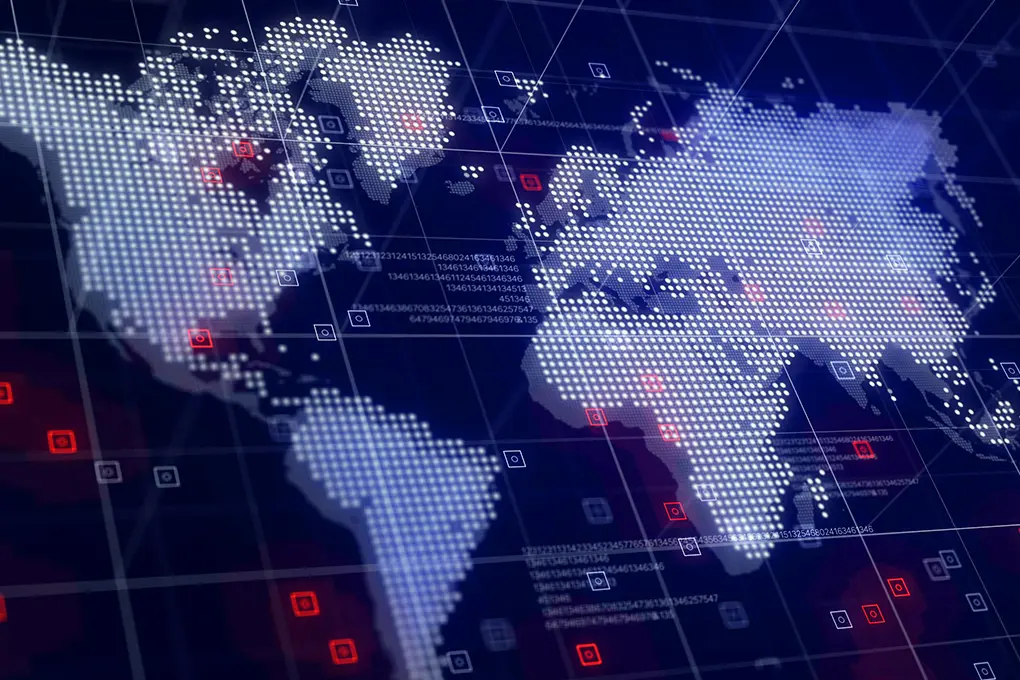
The Center for Strategic & International Studies tracks significant cyber incidents globally, and the pattern is unmistakable: every major geopolitical flashpoint produces a wave of civilian data exposure.
Why Civilians Get Caught in Geopolitical Cyber Crossfire
Nation-state hackers use three main vectors that directly harm individuals:
- Mass Data Breaches: Attacks on financial institutions, healthcare providers, and government databases expose Social Security numbers, financial records, and medical histories at scale.
- Supply Chain Compromise: Hackers infiltrate third-party vendors to reach their real targets – and your data sits in those vendor systems. The November 2025 Salesforce breach hit over 200 companies and their customers simultaneously.
- Credential Harvesting: State actors steal usernames and passwords from large platform breaches, then sell or use them to access individual financial accounts.
If your data is in a breached system – and statistically, it probably is – geopolitical cyber operations have a direct line to your identity.

Geopolitical Threats Cybersecurity Professionals Watch Most Closely
Understanding which threat actors are active helps you understand the risks you face. Here’s a snapshot of the current state-sponsored threat environment:
| Nation-State Actor | Primary Targets | Tactics Used | Recent Activity |
| China (Volt Typhoon, Salt Typhoon) | U.S. critical infrastructure, telecoms, government | Long-term network infiltration, credential theft | Breached 8+ U.S. telecom providers 2022–2024 |
| Russia (Sandworm, APT29) | Ukraine allies, NATO members, energy infrastructure | Destructive malware, hybrid warfare | Took control of Norwegian dam in 2025 |
| North Korea (Lazarus Group) | Crypto exchanges, financial platforms, IT firms | Fake IT workers, ransomware, crypto theft | $30.4M crypto theft, November 2025 |
| Iran (APT33, APT34) | Critical infrastructure, government networks | Brute force, credential access | Targeted U.S. infrastructure in late 2024 |
The ISACA primer on geopolitics and cybersecurity risk makes it clear: offensive cyber operations are now standard tools of state conflict – and the spillover to civilian life is not accidental.
How Global Instability Increases Your Personal Cyber Risk
Geopolitical volatility doesn’t just create individual attacks. It shifts the entire threat environment for everyone online.
Sanctions Trigger Retaliatory Campaigns
When governments impose new sanctions or trade restrictions, the targeted nations often respond with cyber operations. A region that was “low risk” last quarter can become a high-risk zone overnight – pushing new waves of phishing campaigns, ransomware, and credential-stuffing attacks toward anyone connected to that region’s adversaries.
State-Backed Ransomware Groups Target Individuals
The line between nation-state hackers and criminal groups is increasingly blurred. Governments quietly back ransomware operations for financial gain and political disruption. When these groups target healthcare providers, utility companies, or financial services, the personal data of millions of ordinary people gets exposed. Understanding dark web dangers and how stolen data circulates is the first step to protecting yourself when these breaches happen.
Supply Chain Attacks Scale Civilian Exposure
A geopolitically motivated attack on one company can cascade through its entire supply chain. CISA’s 2025 annual review documented campaigns specifically targeting network edge devices to enable mass data theft. You don’t need to be a direct target – you just need to use a service that is. Our guide to supply chain risks and fake app threats covers how these vectors reach your devices.
Digital Fragmentation Creates New Compliance Gaps
As governments push for data sovereignty and local storage requirements, multinational companies scramble to comply with conflicting rules. These transitions create security gaps that threat actors exploit. According to the WEF Global Cybersecurity Outlook 2026, this digital fragmentation is creating measurably more attack surfaces across every sector.

What Geopolitical Cyber Risk Looks Like for Individuals and Families
Most cybersecurity coverage of geopolitics focuses on corporations and governments. But the downstream effects reach every household.
Here’s what geopolitically driven cyber risk means in practice for regular people:
- Identity Theft from State-Sponsored Breaches: When state hackers target government databases or financial systems, the resulting breach dumps your Social Security number, address history, and financial data onto criminal markets.
- Financial Account Compromise: Credential theft campaigns driven by geopolitical actors fuel account takeover attacks. Your banking login, investment platform, and retirement accounts are targets.
- Medical Record Exposure: Healthcare systems are frequent targets in geopolitical cyber campaigns. Exposed medical records enable sophisticated fraud and blackmail.
- Increased Phishing Sophistication: Nation-state hackers develop phishing techniques and tools that quickly migrate to criminal groups, making the scam emails and texts targeting your family smarter and harder to detect. Our scam and phishing prevention guide explains what to watch for.
- Dark Web Credential Sales: Data from geopolitically motivated breaches floods dark web markets within hours. Criminals buy your credentials and use them to drain accounts before you know anything happened.

Protecting Yourself from Geopolitical Cyber Threats
You can’t prevent nation-state attacks. You can make sure that when your data is exposed, the damage is caught fast and contained. These are the protection layers that matter most:
Identity Monitoring That Detects Breach Fallout
When a state-sponsored hack exposes your data, the clock starts immediately. The faster you’re alerted, the less damage criminals can do. Identity protection services monitor your financial accounts, credit files, Social Security number, and dark web markets in real time – sending alerts before criminals can open accounts or drain funds in your name.
Strong options include:
- IDShield: Unique access to licensed private investigators for identity theft recovery, not just automated alerts.
- Cloaked: Reduces your digital footprint by masking personal data and removing it from broker databases that state hackers exploit.
- Identity Guard Ultra: Three-bureau credit monitoring, AI-powered dark web surveillance, and up to $5 million in insurance for families.
- NordProtect: Credit and dark web monitoring paired with cybersecurity tools from a trusted security brand.

VPNs to Shield Your Connection from State-Level Surveillance
Geopolitical cyber campaigns increasingly target individuals’ internet traffic – especially on public networks. A VPN encrypts your connection and prevents network-level interception. NordVPN Complete combines a no-logs VPN with dark web monitoring and password management in one package – the most efficient protection layer for remote workers and travelers operating across multiple networks. Our guide on whether a VPN is worth it breaks down when and why encryption matters most.
All-in-One Security to Close Multiple Exposure Points
State-sponsored threats often chain multiple attack vectors – malware, phishing, credential theft, and network intrusion – in coordinated campaigns. A platform that covers all layers closes more gaps than individual point solutions. Bitdefender Premium delivers antivirus, anti-tracker, VPN, and data breach alerts in one package, independently tested to catch threats that free security tools miss.

Know Your Exposure: What to Check Right Now
| Protection Layer | What It Defends Against | Recommended Product |
| Identity Monitoring | Breach fallout, credential theft, account fraud | IDShield / Identity Guard Ultra |
| Digital Footprint Reduction | Broker databases used by hackers, targeted phishing | Cloaked |
| VPN Encryption | Network interception, public Wi-Fi attacks | NordVPN Complete |
| All-in-One Security | Malware, ransomware, phishing, trackers | Bitdefender Premium |
| Credit & Dark Web Monitoring | Fraudulent account openings, financial fraud | NordProtect |
Taking Action Against Geopolitical Cyber Threats
Geopolitical instability isn’t going away – and neither is its impact on your digital life. The four major state-sponsored threat actors are more active, more sophisticated, and more willing to expose civilian data than at any point in the past decade.
The good news: the protection playbook is clear. Identity monitoring catches breach fallout before it becomes financial disaster. VPN encryption blocks network-level surveillance. All-in-one security platforms close the gaps that individual tools miss. Reducing your digital footprint shrinks the surface area attackers have to work with.
Worried about what state-sponsored data breaches mean for your identity and finances? Browse Batten’s identity protection collection for expert-vetted monitoring services that alert you the moment your data is exposed – and back you with licensed investigators when you need to fight back.
Frequently Asked Questions
How Do Geopolitical Tensions Directly Increase Cyber Risk for Individuals?
When governments impose sanctions or engage in conflicts, targeted nations respond with cyber campaigns that hit civilian infrastructure, financial systems, and data platforms. The resulting breaches expose millions of people’s personal information to criminal markets. State-sponsored attacks also fund and train criminal hacker groups, raising the sophistication of the fraud and phishing attempts targeting everyday users.
What Are the Most Common Nation-State Cyber Threats Facing Families in 2026?
Mass data breaches from attacks on healthcare, financial, and government systems are the most direct threat to families. Credential harvesting – stealing login details from large-scale breaches – enables account takeover attacks on banking and investment accounts. Supply chain attacks targeting vendors and service providers cascade exposure to millions of customers simultaneously.
Can a VPN Protect Me from Geopolitical Cyber Threats?
A VPN encrypts your internet traffic and shields your connection from network-level surveillance – particularly important on public Wi-Fi where state-backed actors and their criminal proxies actively intercept data. It doesn’t protect against data breaches at the companies you use, but it prevents your traffic from being monitored, intercepted, or redirected. Pair a VPN with identity monitoring for layered protection.
How Does a State-Sponsored Cyber Attack Affect My Personal Identity?
State actors target large databases – government records, telecom providers, healthcare systems, financial platforms – that hold your personal information. When those systems are breached, your Social Security number, financial data, and credentials get dumped onto dark web markets within hours. Criminal buyers use that data for fraudulent account openings, tax fraud, and financial account takeover.
What Is the Difference Between Geopolitical Cyber Espionage and Criminal Cyber Attacks?
Espionage is intelligence-driven – state actors quietly steal data, maintain persistent access, and avoid detection for months or years. Criminal attacks prioritize speed and financial gain – quick credential theft, ransomware deployment, account fraud. The lines are increasingly blurred, as documented by Rapid7’s geopolitical cyber risk analysis, with governments quietly backing criminal groups for both financial and strategic purposes.
Should I Change My Cybersecurity Strategy Because of Global Instability?
Yes. Static security setups built for stable threat environments don’t account for rapid escalation. Add real-time identity monitoring to detect breach fallout quickly, use a VPN consistently on non-home networks, and reduce your digital footprint by removing data from broker databases. If you haven’t audited what personal data is publicly accessible, tools like Cloaked automate that removal process.
Sources
- “Global Cybersecurity Outlook 2026,” 2026, World Economic Forum, https://www.weforum.org/publications/global-cybersecurity-outlook-2026/digest/
- “How Cybersecurity Can Successfully Navigate Geopolitics,” 2026, World Economic Forum, https://www.weforum.org/stories/2026/02/cybersecurity-and-geopolitics-the-challenges-to-build-resilience-in-a-fragmented-world/
- “Geopolitics and Cyber Risk: How Global Tensions Shape the Attack Surface,” 2025, Rapid7, https://www.rapid7.com/blog/post/it-geopolitics-and-cyber-risk-how-global-tensions-shape-the-attack-surface/
- “Cybersecurity + Geopolitical Conflict: What Boards and CEOs Should Know,” 2025, PwC, https://www.pwc.com/us/en/services/consulting/cybersecurity-risk-regulatory/library/cybersecurity-geopolitical-conflict-board-ceo-response.html
- “Cybersecurity’s Next Test: AI, Quantum, and Geopolitics,” 2025, Help Net Security / PwC, https://www.helpnetsecurity.com/2025/10/07/pwc-global-cyber-risk-trends-2026/
- “Global Tensions Are Pushing Cyber Activity Toward Dangerous Territory,” 2026, Help Net Security, https://www.helpnetsecurity.com/2026/01/19/cybersecurity-geopolitical-tensions/
- “How Geopolitics Affects Cybersecurity Risk: A Primer,” 2024, ISACA, https://www.isaca.org/resources/news-and-trends/isaca-now-blog/2024/how-geopolitics-affects-cybersecurity-risk-a-primer
- “Nation-State Cyber Actors,” 2025, CISA, https://www.cisa.gov/topics/cyber-threats-and-advisories/nation-state-cyber-actors
- “Significant Cyber Incidents,” 2026, Center for Strategic & International Studies, https://www.csis.org/programs/strategic-technologies-program/significant-cyber-incidents
- “Cyber Risk Outlook 2025: RANE’s 3–5 Year Analysis of Cyberspace in Geopolitics,” 2025, RANE Network, https://www.ranenetwork.com/blog/cyber-risk-outlook-2025-ranes-3-5-year-analysis-of-cyberspace-in-geopolitics